
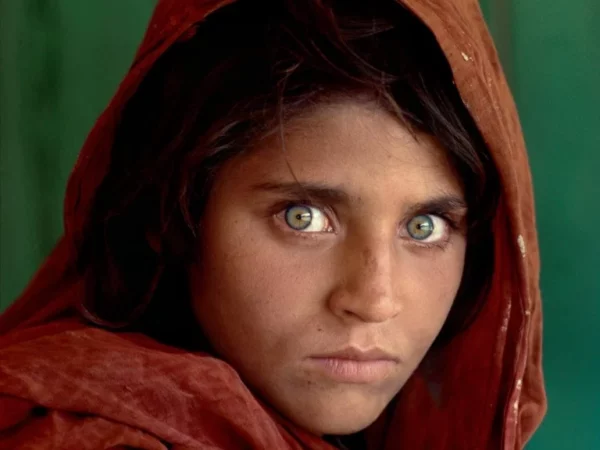
Sharbat Gula
The Iconic Afghan Girl: A Story of Survival and Identity
In June 1985, National Geographic published an image that would become one of the most recognizable and enduring photographs of the 20th century.
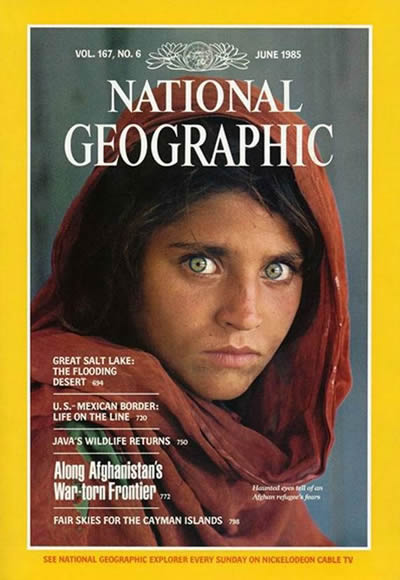
The piercing green eyes of a young Afghan girl (Sharbat Gula), her face framed by a red headscarf, stared out from the cover of the magazine, captivating millions around the world. This image, taken by photographer Steve McCurry in 1984, remains a powerful symbol of the human cost of conflict and the resilience of the human spirit.
The Photographer: Steve McCurry
Steve McCurry, an American photojournalist, is renowned for his vibrant color photography and his ability to capture the human side of global conflicts. Born in Philadelphia in 1950, McCurry’s career took off when he disguised himself in native garb and crossed the Pakistan border into rebel-controlled Afghanistan just before the Soviet invasion. The rolls of film he smuggled out sewn into his clothes contained images that would make their way into newspapers and magazines around the world, earning him the Robert Capa Gold Medal for Best Photographic Reporting from Abroad.

McCurry’s work has since spanned numerous conflicts and cultures, consistently focusing on the human face of suffering and survival. Yet, despite his extensive portfolio, it is the portrait of the Afghan girl that remains his most famous work.
The Girl: Sharbat Gula
The girl in the photograph is Sharbat Gula. She was approximately twelve years old when McCurry captured her image in a refugee camp in Nasir Bagh, Pakistan. The camp was a temporary home for Afghans fleeing the Soviet occupation of their country, a brutal conflict that displaced millions and caused untold suffering.
Gula’s identity remained a mystery for many years. National Geographic referred to her simply as “the Afghan Girl.” Her haunting eyes, filled with a mix of fear and defiance, embodied the plight of an entire generation of Afghan refugees. The photograph became an icon, symbolizing the impact of war on innocent lives.
The Search for Sharbat Gula
In early 2002, seventeen years after the photograph was taken, National Geographic launched a search to find the Afghan girl and discover her story. McCurry returned to Afghanistan, where the country was once again embroiled in conflict following the U.S. invasion post-9/11. The search was a formidable challenge, given the lack of records and the passage of time.

With the help of a local man who had connections in the refugee community, McCurry and a National Geographic team managed to locate Sharbat Gula in a remote region of Afghanistan. By then, she was a mother of four, living in a small village. Her life had been marked by hardship and struggle, mirroring the experience of many Afghans over the past two decades.
The Legacy of the Photograph
Sharbat Gula’s story and the iconic photograph of her younger self have left a lasting impact on the world. The image has been used to raise awareness about the plight of refugees and the effects of war, serving as a reminder of the ongoing humanitarian crises that often go unnoticed.

In recognition of her iconic status and the challenges she faced, National Geographic created a fund to assist Afghan girls and women. Sharbat Gula herself received medical treatment and support, highlighting the importance of addressing the needs of those affected by conflict.

Conclusion
The photograph of Sharbat Gula is more than just a striking image; it is a testament to the enduring power of photojournalism and the profound impact it can have on our understanding of global issues. Steve McCurry’s portrait of the Afghan girl has transcended its moment in time, continuing to inspire and inform generations about the human cost of war and the resilience of the human spirit.